Taoyuan A8 Deal Notes (4)|AWAREK: Sensor Fusion Thermal Imaging, No Robot Dogs, Partnering With Tender-Bidding SIs
NTUTEC invited us to Taoyuan A8. Fourth stop, AWAREK: the core is sensor fusion thermal imaging with AI alerts. They do not build drones or robot dogs themselves; system integrators bidding on tenders bring them in.
In one sentence
AWAREK does not make robot dogs or drones. They only make the thermal imaging plus sensor fusion layer, and when a system integrator bidding on a public tender needs that capability, the integrator comes to them. Being a component on purpose is far lighter than building a whole-machine brand from zero.
Core claims
- Not building the vehicle is a strategy, not a limitation: the platform goes to partners, while they hold the sensing and interpretation layer.
- Ordinary cameras cannot cover the temperature blind spot: visible light does not see overheating, and the high-temperature anomaly before a fire needs thermal imaging.
- The channel is somebody else’s tender: SIs come to them, which means entering through an entire tender ecosystem.
- VCs give more than money: Howard said in the room that he knows people at a fire protection company and could introduce them. That kind of concrete intro is worth more than “we really believe in you.”
Why I am writing this one up
Following the Taoyuan A8 series, the fourth company of the same session, part four of four: AWAREK Co., Ltd.
The first three are Ruomei (1), EITH (2), and Chenlu (3).
I also assumed at first that they made robot dogs. Only after they clarified it in the room did I realize they do not, and that decision about what not to do is the most memorable thing about this company.
What AWAREK does
In plain language: they fuse thermal imaging, visible light, and other sensing streams, use AI to judge overheating and fire risk, and push alerts. Companies bidding on tenders come to them for integration. AWAREK does not build its own drones or robot dogs.
Core: sensor fusion, not vehicles
The clarification in the room matters: AWAREK’s core is sensor fusion, not drone or robot dog manufacturing.
- They do not build robot dogs, drones, or complete patrol robots
- They do build thermal imaging modules, Edge AI, a cloud platform, and the fused interpretation of different sensing signals
- SIs and integrators going after tenders come to AWAREK when they need the “thermal imaging plus AI alerting” piece, and embed it into a larger bid
The drones, robot dogs, and fire inspection scenarios mentioned in coverage and in the room are more like partner platforms and application scenarios, not product lines AWAREK mass produces.
From fixed to mobile
Thermal imaging already has applications in factory switchgear, electric vehicles, and parking garages, mostly fixed installations. AWAREK’s direction also includes mobile robotic patrol (drones, robot dogs, patrol robots, firefighting), but the vehicle usually comes from a partner, while AWAREK handles the sensor fusion and alerting layer.
Conventional visible-light cameras cannot see heat distribution. Overheating, and the high-temperature anomaly that precedes a fire, need thermal imaging to fill that layer in, then fusion with other sensing data.
Not just image recognition, but thermal image recognition
They were clear about this: what they do is not the vision AI of ordinary CCTV, but recognition and judgment specifically for thermal imagery.
- Detect abnormal temperature rise and hot spots
- Push an alert the moment something goes wrong (notifying the relevant people)
- Combine with a cloud management platform for remote status and device management
Hardware plus cloud plus Edge AI
The product line is more than a lens:
- Hardware: thermal imaging detectors (public specs include POE, WiFi, and so on)
- Edge AI chip: some inference happens on the edge, lowering latency and reducing dependence on the network
- Cloud management: centralized management of devices and alerts
They mentioned the chance to sell a total solution (hardware plus software plus platform, end to end), not just a single sensor.
Deployments already in place (from the room)
- Taoyuan Metro
- Building high-temperature detection
Coverage has also mentioned collaboration with the Cadall P105 robot dog, mounting a thermal imager on a quadruped robot for inspection of substations, chemical plants, and other hazardous sites, as well as locating heat sources through smoke in firefighting.
How they sell: tender-bidding SIs come to them, not building whole machines
Two channel layers were mentioned:
- The main customers are system integrators (SIs), who promote and deploy into sites
- Companies going after tenders proactively approach AWAREK to embed sensor fusion into security, smart building, factory, and metro bids
AWAREK does not need to build drones or run a robot dog production line. They turn thermal imaging plus fusion plus Edge AI plus cloud alerting into an integratable module or total solution. For an SI chasing tenders, that is one more differentiating sensing layer. For AWAREK, entering through the tender ecosystem is lighter than building a whole-machine brand from scratch.
Q&A: VCs give not just money, but connections
In AWAREK’s Q&A, NTUTEC’s Howard mentioned he knows a fire protection company and could make an introduction.
That is a very concrete value-add for a founder. Thermal imaging and firefighting scenarios are already one of AWAREK’s application directions, and if a VC can actually connect them to fire industry players, that is a level of help beyond “we are optimistic about you.” It also reminded me: institutional investors are not just a check. They also carry industry connections, tender channels, and later customer intros. Beyond talking product, a pitch is also where you evaluate whether this VC can connect you to your next site.
Competition and differentiation
Their description of the competitive landscape: rivals tend to specialize in only one piece, and several domains have not been integrated together yet:
| Type | Common limitation |
|---|---|
| Thermal cameras | Have heat, but not necessarily AI alerting and a platform |
| Conventional cameras | Visible light, cannot see overheating |
| Wireless cameras | Easy to deploy, but not a thermal imaging scenario |
| Vision cameras | Strong at image recognition, blind to temperature risk |
AWAREK’s narrative: sensor fusion (thermal imaging plus other sensing) plus AI interpretation plus IoT and cloud push, fixed or mobile, with the vehicle supplied by partners while they focus on the sensing and platform layer.
Company status (checked against public records)
- Legal name: AWAREK Co., Ltd.
- Representative: Kuo Sheng-pei (FINDIT and public coverage)
- Base: Shouchang Street, Taoyuan District, Taoyuan (public sources)
- Positioning: thermal imaging AI temperature and fire detection, AIoT sensing
- Website and brand: awarek.com and others
Taoyuan Metro and the building high-temperature sites came from the room. Details can be added later.
What this one left me with
- Clear positioning: sensor fusion at the core, not going head to head with drone and robot dog manufacturers.
- Clear scenario: fire and overheating are hard pain points that ordinary surveillance cannot cover.
- A product ladder: fixed installation already has a market base, mobile extends through partner platforms.
- Platform thinking: hardware plus Edge AI plus cloud push, embeddable into SI tenders.
- Clear channel: tender-bidding companies come to them; SI integration rather than an in-house whole-machine line.
- VC value beyond capital: Howard offered to introduce a fire protection company, concrete and on point.
- Local cases: Taoyuan Metro and building high-temperature detection, which adds persuasiveness for a session held in Taoyuan.
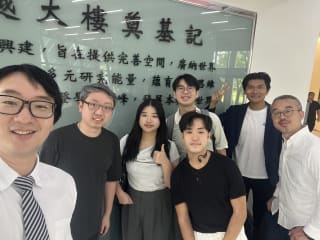
Four companies heard, and the session closes on a group photo.
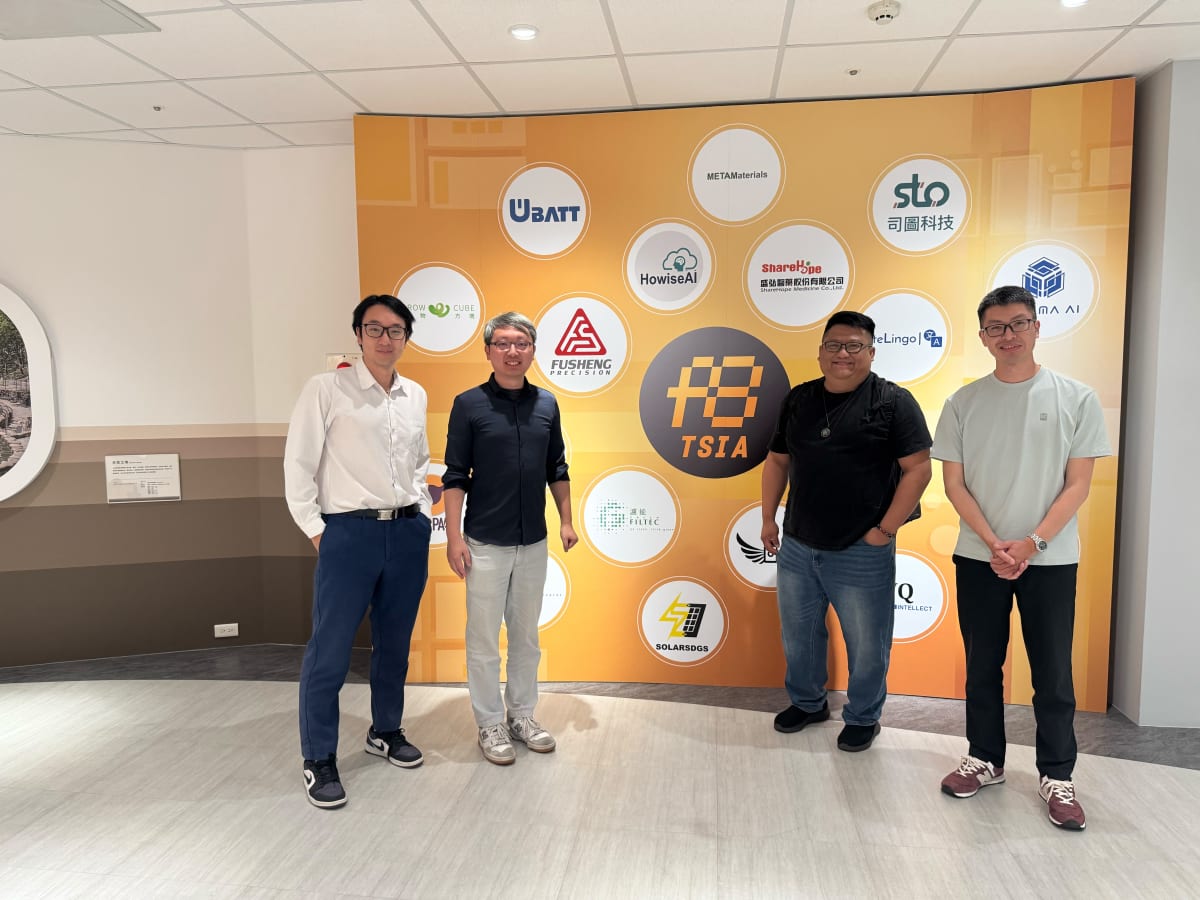
Taoyuan A8 deal notes (four companies)
- (1) Ruomei Technology: AI cooling burns cash, so start from radiation on the materials side
- (2) EITH: turning wastewater into resources, and making a pitch non-experts can follow
- (3) Chenlu Technology: AI dual-lens endoscope, SaMD first, then single-use scopes
- (4) AWAREK: sensor fusion thermal imaging, partnering with tender-bidding SIs